
- Venezuela Defends 25-Year Oil Deal With US, Says It Will Retain Ownership of Resources
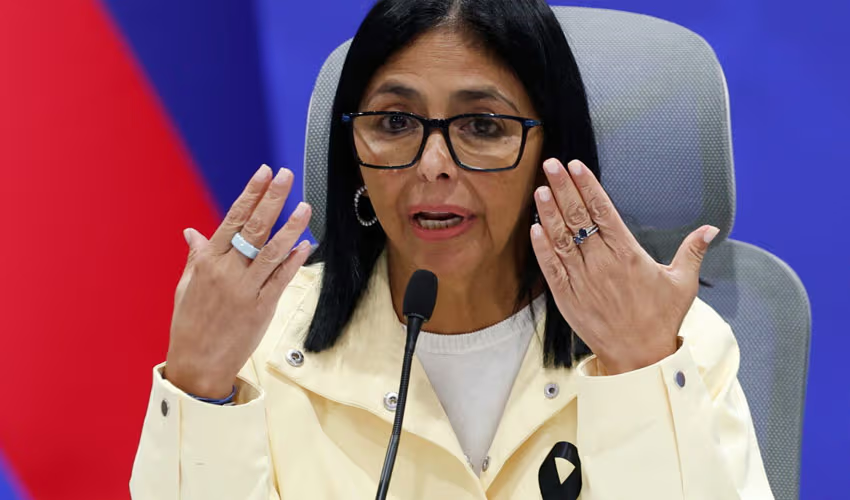
Venezuela’s interim President, Delcy Rodriguez, has defended a new 25-year energy agreement with the United States, insisting that the country will maintain ownership and sovereignty over its natural resources despite Washington taking a greater role in its oil industry.
Rodriguez described the agreement as a “historic” deal, saying it could provide the investment and expertise needed to revive Venezuela’s struggling oil sector and increase government revenue.



The agreement reportedly focuses on the development of 17 strategic oilfields, with an initial target of producing more than 1.5 million barrels of oil per day.
Venezuela projects $209 billion in revenue
Rodriguez said the agreement could generate approximately $209 billion for the Venezuelan government, using an estimated oil price of $65 per barrel.
She also said Venezuela could receive around $19 from every barrel of oil produced and sold to the United States.
The government believes the increased production and foreign investment could provide much-needed revenue while helping rebuild infrastructure and expand the country’s energy industry.
Rodriguez added that the 1.5 million barrels per day target is only an initial objective.
The wider development plan reportedly includes eight additional oil blocks, potentially expanding production further in the future.
Rodriguez insists Venezuela will keep ownership
Despite the increased involvement of the United States and foreign oil companies, Rodriguez insisted that Venezuela would not surrender ownership of its natural resources.
She argued that foreign capital, technology and expertise would instead be used to help rebuild an industry that has been weakened by years of sanctions, underinvestment and mismanagement.
“This 25-year bilateral project envisages the development of 17 strategic oilfields,” Rodriguez said during a televised address.
Venezuela has some of the world’s largest proven oil reserves, but its current production remains significantly below the country’s enormous potential.
US set for bigger role in Venezuela’s oil industry
The agreement comes as US President Donald Trump has announced plans for Washington to play a much larger role in Venezuela’s oil sector.
Trump said the arrangement would give the United States majority control of more than 65 billion barrels of Venezuela’s proven oil reserves through partnerships with private companies.
However, several details about how the proposed arrangement will operate remain subject to further agreements.
The development represents a major change in the relationship between Washington and Caracas, particularly given the long-running political and economic tensions between the two countries.
Chevron among companies expected to benefit
Several international oil companies are expected to become involved as Venezuela moves forward with the new energy framework.
Chevron is reportedly among the companies expected to finalize arrangements connected to oil exploration and production.
The Venezuelan government hopes the participation of major international energy companies will bring investment, modern technology and technical expertise into the country’s petroleum industry.
The goal is to increase production while improving the infrastructure required to process and export Venezuelan crude.
Venezuela’s oil industry faces major challenges
Despite possessing enormous reserves, Venezuela has struggled to maximize its oil production.
Years of economic problems, sanctions, declining infrastructure and difficulties within the state-run oil industry have affected output.
The new agreement is therefore being presented by Venezuelan officials as an opportunity to reverse some of those challenges.
The government hopes international investment will help restore production capacity and generate additional funds for the country’s economy.
A major development for Venezuela
Venezuela’s oil reserves have long made the country a major player in the global energy market.
The proposed 25-year agreement could therefore have significant implications for both Venezuela and the United States.
For Caracas, increased production could mean billions of dollars in additional revenue.
For Washington, greater access to Venezuelan oil could strengthen its position in the global energy market while giving US companies a larger role in one of the world’s biggest oil-producing countries.
However, the ambitious production and revenue projections will depend on the successful implementation of the agreement, future oil prices and the ability to attract the necessary investment.
For now, Rodriguez is presenting the deal as a partnership that can help rebuild Venezuela’s oil industry without giving up the country’s ownership of its natural resources.
Further details are expected to emerge as Venezuela and participating companies finalize additional agreements in the coming days.
What do you think about Venezuela’s new oil deal with the United States? Share your thoughts in the comments.
WhatsApp Chat With Us Have a question? Send us a message. ›